
- Browse Category
Subjects
 We Begin at the EndLearn More
 - Choice Picks
- Top 100 Free Books
- Blog
- Recently Added
- Submit your eBook
- Browse Category
We Begin at the EndLearn More
- Choice Picks
- Top 100 Free Books
- Blog
- Recently Added
- Submit your eBook
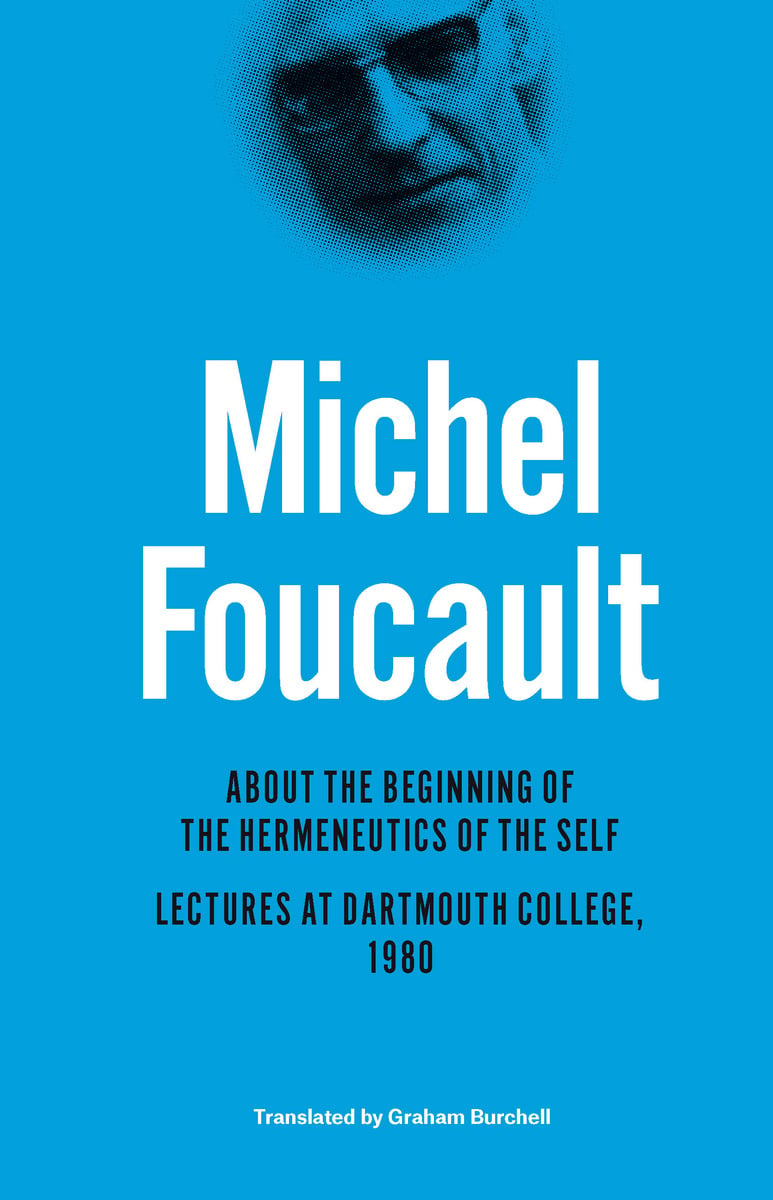
About the Beginning of the Hermeneutics of the Self
2020-12-29 15:05:59
In 1980, Michel Foucault began a vast project of research on the relationship between subjectivity and truth, an examination of conscience, confession, and truth-telling that would become a crucial feature of his life-long work on the relationship be...
Read more
In 1980, Michel Foucault began a vast project of research on the relationship between subjectivity and truth, an examination of conscience, confession, and truth-telling that would become a crucial feature of his life-long work on the relationship between knowledge, power, and the self. The lectures published here offer one of the clearest pathways into this project, contrasting Greco-Roman techniques of the self with those of early Christian monastic culture in order to uncover, in the latter, the historical origin of many of the features that still characterize the modern subject. They are accompanied by a public discussion and debate as well as by an interview with Michael Bess, all of which took place at the University of California, Berkeley, where Foucault delivered an earlier and slightly different version of these lectures. Foucault analyzes the practices of self-examination and confession in Greco-Roman antiquity and in the first centuries of Christianity in order to highlight a radical transformation from the ancient Delphic principle of “know thyself” to the monastic precept of “confess all of your thoughts to your spiritual guide.” His aim in doing so is to retrace the genealogy of the modern subject, which is inextricably tied to the emergence of the “hermeneutics of the self”—the necessity to explore one’s own thoughts and feelings and to confess them to a spiritual director—in early Christianity. According to Foucault, since some features of this Christian hermeneutics of the subject still determine our contemporary “gnoseologic” self, then the genealogy of the modern subject is both an ethical and a political enterprise, aiming to show that the “self” is nothing but the historical correlate of a series of technologies built into our history. Thus, from Foucault’s perspective, our main problem today is not to discover what “the self” is, but to try to analyze and change these technologies in order to change its form.
Less

Compare Prices
| Store | Availability | Book Format | Condition | Price |
|---|---|---|---|---|
| BetterWorld.com - New, Used, Rare Books & Textbooks | In Stock | Buy USD 5.51 | ||
| Indigo Books & Music | In Stock | Hard Cover | Hard Cover | Buy CAD 31.88 |
| eBooks.com | In Stock | Buy GBP 19.00 |
Available Discount
No Discount available
Related Books
View All
The Wonderful Things You Will Be

Diary of an Awesome Friendly Kid: Rowley Jefferson's Journal

Going to School

Commander in Cheat: How Golf Explains Trump

Secrets Between Us: An absolutely gripping psychological thriller

The Book Club

Falter: Has the Human Game Begun to Play Itself Out?

Row, Row, Row Your Boat (Indestructibles Series)

We Are Not Friends (You Are Not Small)

There Was an Old Lady Who Swallowed a Chick!

Made for Me

American Moonshot: John F. Kennedy and the Great Space Race

The Silent Woman (Cat Carlisle, Book 1)
Can't Make This Stuff Up!: Finding the Upside to Life's Downs

Life Will Be the Death of Me: ...And You Too!

The Secret Wife: A captivating story of romance, passion and mystery

You Be You: Detox Your Life, Crush Your Limitations, and Own Your Awesome

Hurricane Season

House of Shadows: An Enthralling Historical Mystery

Good Night, Little Blue Truck

Feed Your Best Friend Better: Easy, Nutritious Meals and Treats for Dogs

Trillion Dollar Coach: The Leadership Playbook of Silicon Valley's Bill Campbell
Clean & Lean: 30 Days, 30 Foods, a New You!
The Pout-Pout Fish

Twinkle, Twinkle, Little Star (Indestructibles Series)

Settings
Reflow text when sidebars are open.
