
- Browse Category
Subjects
 We Begin at the EndLearn More
 - Choice Picks
- Top 100 Free Books
- Blog
- Recently Added
- Submit your eBook
- Browse Category
We Begin at the EndLearn More
- Choice Picks
- Top 100 Free Books
- Blog
- Recently Added
- Submit your eBook
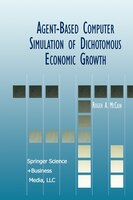
Agent-Based Computer Simulation of Dichotomous Economic Growth
2021-01-03 02:01:28
Agent-Based Computer Simulation of Dichotomous Economic Growthreports a project in agent-based computer stimulation of processes of economic growth in a population of boundedly rational learning agents.The study is an exercise in comparative simulati...
Read more
Agent-Based Computer Simulation of Dichotomous Economic Growthreports a project in agent-based computer stimulation of processes of economic growth in a population of boundedly rational learning agents.
The study is an exercise in comparative simulation. That is, the same family of growth models will be simulated under different assumptions about the nature of the learning process and details of the production and growth processes. The purpose of this procedure is to establish a relationship between the assumptions and the simulation results.
The study brings together a number of theoretical and technical developments, only some of which may be familiar to any particular reader. In this first chapter, some issues in economic growth are reviewed and the objectives of the study are outlined. In the second chapter, the simulation techniques are introduced and illustrated with baseline simulations of boundedly rational learning processes that do not involve the complications of dealing with long-run economic growth. The third chapter sketches the consensus modern theory of economic growth which is the starting point for further study. In the fourth chapter, a family of steady growth models are simulated, bringing the simulation, growth and learning aspects of the study together. In subsequent chapters, variants on the growth model are explored in a similar way. The ninth chapter introduces trade, with a spacial trading model that is combined with the growth model in the tenth chapter.
The book returns again and again to the key question: to what extent can the simulations `explain'' the puzzles of economic growth, and particularly the key puzzle of dichotomization, by constructing growth and learning processes that produce the puzzling results? And just what assumptions of the simulations are most predictable associated with the puzzling results? Less
The study is an exercise in comparative simulation. That is, the same family of growth models will be simulated under different assumptions about the nature of the learning process and details of the production and growth processes. The purpose of this procedure is to establish a relationship between the assumptions and the simulation results.
The study brings together a number of theoretical and technical developments, only some of which may be familiar to any particular reader. In this first chapter, some issues in economic growth are reviewed and the objectives of the study are outlined. In the second chapter, the simulation techniques are introduced and illustrated with baseline simulations of boundedly rational learning processes that do not involve the complications of dealing with long-run economic growth. The third chapter sketches the consensus modern theory of economic growth which is the starting point for further study. In the fourth chapter, a family of steady growth models are simulated, bringing the simulation, growth and learning aspects of the study together. In subsequent chapters, variants on the growth model are explored in a similar way. The ninth chapter introduces trade, with a spacial trading model that is combined with the growth model in the tenth chapter.
The book returns again and again to the key question: to what extent can the simulations `explain'' the puzzles of economic growth, and particularly the key puzzle of dichotomization, by constructing growth and learning processes that produce the puzzling results? And just what assumptions of the simulations are most predictable associated with the puzzling results? Less

Compare Prices
| Store | Availability | Book Format | Condition | Price |
|---|---|---|---|---|
| Indigo Books & Music | In Stock | Buy CAD 170.50 | ||
| BetterWorld.com - New, Used, Rare Books & Textbooks | In Stock | Buy USD 167.63 |
Available Discount
No Discount available
Related Books
View All
Feed Your Best Friend Better: Easy, Nutritious Meals and Treats for Dogs

Commander in Cheat: How Golf Explains Trump

The Wonderful Things You Will Be

House of Shadows: An Enthralling Historical Mystery
Can't Make This Stuff Up!: Finding the Upside to Life's Downs
Falter: Has the Human Game Begun to Play Itself Out?
Clean & Lean: 30 Days, 30 Foods, a New You!

The Book Club

There Was an Old Lady Who Swallowed a Chick!

Life Will Be the Death of Me: ...And You Too!

American Moonshot: John F. Kennedy and the Great Space Race

Made for Me

The Silent Woman (Cat Carlisle, Book 1)

Good Night, Little Blue Truck

Twinkle, Twinkle, Little Star (Indestructibles Series)

Going to School

We Are Not Friends (You Are Not Small)

Row, Row, Row Your Boat (Indestructibles Series)

You Be You: Detox Your Life, Crush Your Limitations, and Own Your Awesome

The Secret Wife: A captivating story of romance, passion and mystery

Secrets Between Us: An absolutely gripping psychological thriller

The Pout-Pout Fish

Hurricane Season
Diary of an Awesome Friendly Kid: Rowley Jefferson's Journal
Trillion Dollar Coach: The Leadership Playbook of Silicon Valley's Bill Campbell

Settings
Reflow text when sidebars are open.
