
- Browse Category
Subjects
 We Begin at the EndLearn More
 - Choice Picks
- Top 100 Free Books
- Blog
- Recently Added
- Submit your eBook
- Browse Category
We Begin at the EndLearn More
- Choice Picks
- Top 100 Free Books
- Blog
- Recently Added
- Submit your eBook
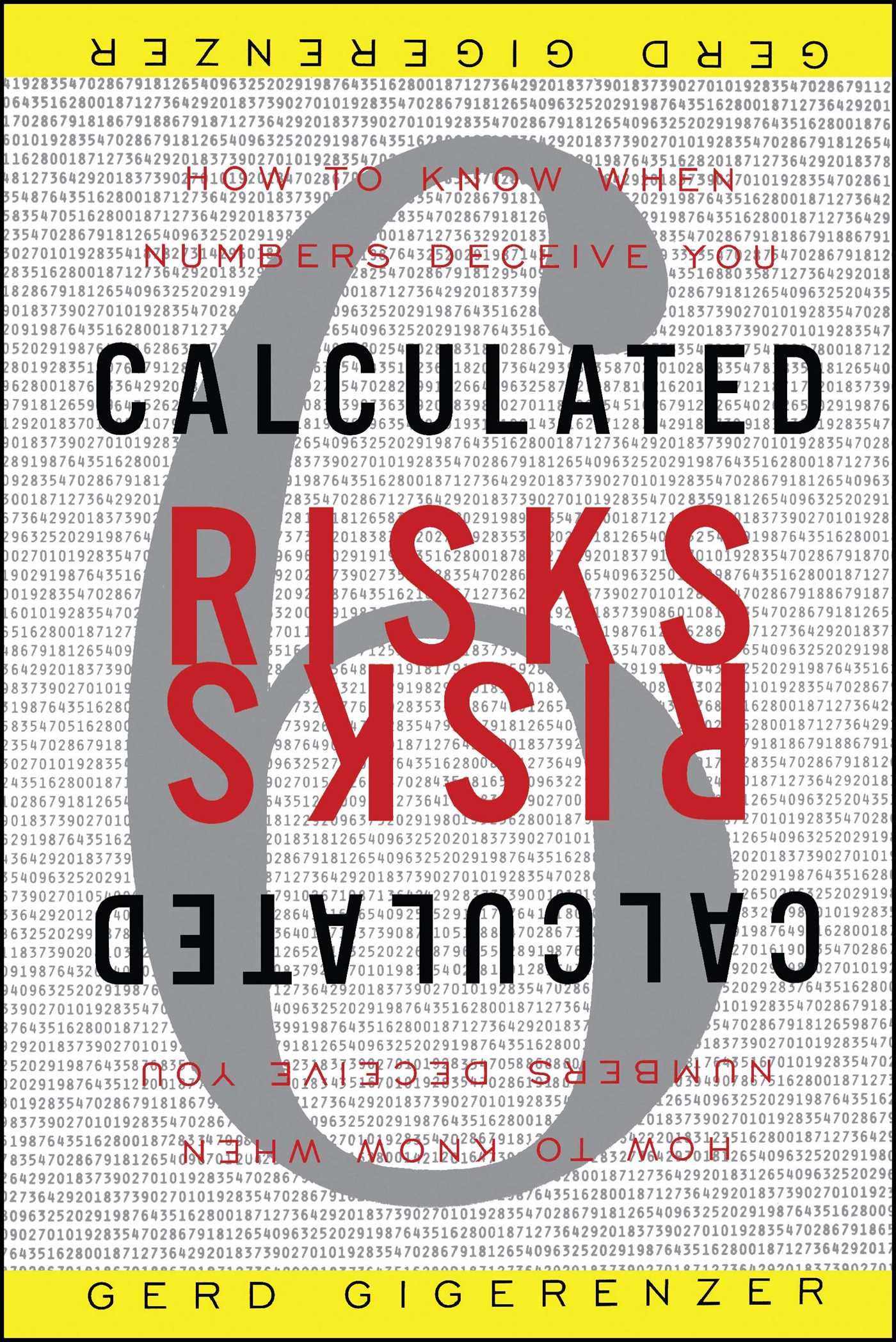
Calculated Risks
2020-07-10 18:38:02
At the beginning of the twentieth century, H. G. Wells predicted that statistical thinking would be as necessary for citizenship in a technological world as the ability to read and write. But in the twenty-first century, we are often overwhelmed by a...
Read more
At the beginning of the twentieth century, H. G. Wells predicted that statistical thinking would be as necessary for citizenship in a technological world as the ability to read and write. But in the twenty-first century, we are often overwhelmed by a baffling array of percentages and probabilities as we try to navigate in a world dominated by statistics. Cognitive scientist Gerd Gigerenzer says that because we haven't learned statistical thinking, we don't understand risk and uncertainty. In order to assess risk -- everything from the risk of an automobile accident to the certainty or uncertainty of some common medical screening tests -- we need a basic understanding of statistics. Astonishingly, doctors and lawyers don't understand risk any better than anyone else. Gigerenzer reports a study in which doctors were told the results of breast cancer screenings and then were asked to explain the risks of contracting breast cancer to a woman who received a positive result from a screening. The actual risk was small because the test gives many false positives. But nearly every physician in the study overstated the risk. Yet many people will have to make important health decisions based on such information and the interpretation of that information by their doctors. Gigerenzer explains that a major obstacle to our understanding of numbers is that we live with an illusion of certainty. Many of us believe that HIV tests, DNA fingerprinting, and the growing number of genetic tests are absolutely certain. But even DNA evidence can produce spurious matches. We cling to our illusion of certainty because the medical industry, insurance companies, investment advisers, and election campaigns have become purveyors of certainty, marketing it like a commodity. To avoid confusion, says Gigerenzer, we should rely on more understandable representations of risk, such as absolute risks. For example, it is said that a mammography screening reduces the risk of breast cancer by 25 percent. But in absolute risks, that means that out of every 1,000 women who do not participate in screening, 4 will die; while out of 1,000 women who do, 3 will die. A 25 percent risk reduction sounds much more significant than a benefit that 1 out of 1,000 women will reap. This eye-opening book explains how we can overcome our ignorance of numbers and better understand the risks we may be taking with our money, our health, and our lives.
Less

Available Discount
No Discount available
Related Books
View All
The Querist

Tea and Tea Drinking

Readings on Fascism and National Socialism

An Essay on the Principle of Population

A Review of Uncle Tom's Cabin: Or, an Essay on Slavery

The History of the Catnach Press : At Berwick-Upon-Tweed, Alnwick and Newcastle-Upon-Tyne, in Northumberland, and Seven Dials, London

New Worlds for Old: A Plain Account of Modern Socialism

Crime: Its Cause and Treatment

Visions and Beliefs in the West of Ireland, Second Series

Visions and Beliefs in the West of Ireland, First Series

Signs of Change; Seven Lectures

What Shall We Do?

The Negro in the South

The Place of Science in Modern Civilisation, and Other Essays

Abolition Fanaticism in New York; Speech of a Runaway Slave from Baltimore

Crowds: A Moving-Picture Democracy...

The Abounding American

The Mediaeval Mind Vol 1 of 2: A History of The Development of Thought & Emotion in The Middle Ages

Women's Wild Oats: Essays on the Re-Fixing of Moral Standards

The Christmas Kalends of Provence and Some Other Provençal Festivals

What to Do? Thoughts Evoked by the Census of Moscow

The Black Man: The Father of Civilization - Proven by Biblical History
.jpg)
Kankanay Ceremonies (American Archaeology and Ethnology)

Women's Work

American Indian Stories

Settings
Reflow text when sidebars are open.
