
- Browse Category
Subjects
 We Begin at the EndLearn More
 - Choice Picks
- Top 100 Free Books
- Blog
- Recently Added
- Submit your eBook
- Browse Category
We Begin at the EndLearn More
- Choice Picks
- Top 100 Free Books
- Blog
- Recently Added
- Submit your eBook
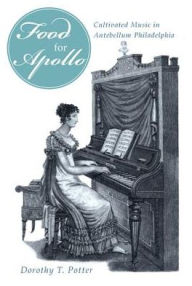
'Food for Apollo': Cultivated Music in Antebellum Philadelphia Dorothy
2020-05-07 07:59:39
'Food for Apollo:' Cultivated Music in Antebellum Philadelphia by Dorothy Potter, describes and evaluates the growth and scope of cultivated music in that city, from the early eighteenth-century to the advent of the Civil War. In many works dealing w...
Read more
'Food for Apollo:' Cultivated Music in Antebellum Philadelphia by Dorothy Potter, describes and evaluates the growth and scope of cultivated music in that city, from the early eighteenth-century to the advent of the Civil War. In many works dealing with American culture, discussion of music's influence is limited to a few significant performances or persons, or ignored altogether. The study of music's role in cultural history is fairly recent, compared to literature, art, and architecture. Whether vernacular or based on European models, a more thorough understanding of music should include attention to related subjects. This book examines concert and theatre performances, music publishing, pre-1861 manufacture of pianos, and British and American literature which promoted music, informing readers about individuals such as Wolfgang Amadeus Mozart, whose works and fame generated interest on both sides of the Atlantic. Though initially hindered by the Society of Friends' opposition to entertainments of all sorts, numbers of non-Quakers supported dancing, concerts, and drama by the 1740s; this interest accelerated after the Revolution, with the building of some of America's earliest theatres, and over time, Musical Fund Hall, the Academy of Music, and other venues. Emigrant musicians, notably Alexander Reinagle, introduced new works by contemporary Europeans such as Franz Joseph Haydn, Mozart, C.P. E. Bach, and many others, in concerts blended with favorite tunes, like the 'President's March.'. Later in the nineteenth century, Philadelphia's noted African-American composer and band leader Francis Johnson, continued the tradition of mixing classical and vernacular works in his popular promenade concerts. As they advertised and shipped their music to an ever-growing market, post-Revolutionary emigrant music publishers, including Benjamin Carr and his family, George Willig, and George Blake, created successful businesses that influenced American taste far beyond Philadelphia. While many of their imprints were vernacular pieces of all sorts, pirated European music adapted for amateur pianists, many of whom were women, formed a substantial part of their stock. Mozart's music was frequently republished or adapted for domestic entertainments, particularly as waltzes and songs from his operas.
Less

Compare Prices
| Store | Availability | Book Format | Condition | Price |
|---|---|---|---|---|
| Barnes & Noble | In Stock | NOOK Book | NOOK Book | Buy USD 80.5 |
Available Discount
No Discount available
Related Books
View All
Hall Caine, the Man and the Novelist

A Student in Arms. Second Series

The Pirates Own Book, Or, Authentic Narratives of the Lives, Exploits, and Executions of the Most Celebrated Sea Robbers

The Outline of History: Being a Plain History of Life and Mankind

Biographical notice of Nicolo Paganini

The Women Who Came in the Mayflower

Famous Men and Great Events of the Nineteenth Century

The Progress of the Century

Foot-Prints of a Letter-Carrier or a History of the World's Correspondence

The Last Million; How They Invaded France - and England

Harvard Classics Volume 28

The Yonezawa Matchlock. Mighty Gun of the Uesugi Samurai

The Messenger

The Growth of the English Constitution From the Earliest Times

The Vagabond in Literature

Travels Through the Interior Parts of North-America, in the Years 1766, 1767, and 1768. By J. Carver, ... Illustrated With Copper Plates.

Napoleon's Marshals

The Art of Kissing - Curiously, Historically, Humorously, Poetically Considered

Hitler 1889 - 1936: Band 1

A Full Report of the Trial of the Henry Hetherington on an Indictment for Blasphemy; Before Lord Denman and a Special Jury, at the Court of Queen's ... 8, 1840: For Selling Haslam's Letters t

The Revolutions of Portugal. Written in French by the Abbot De Vertot, ... Done Into English From the Last French Edition.
Outwitting the Hun; My Escape From a German Prison Camp
.jpeg)
Egitto (Italian Edition)

Modern Machine-Shop Practice, Volumes I and II

Burma's Missing Dots: The emerging face of Genocide

Settings
Reflow text when sidebars are open.
