
- Browse Category
Subjects
 We Begin at the EndLearn More
 - Choice Picks
- Top 100 Free Books
- Blog
- Recently Added
- Submit your eBook
- Browse Category
We Begin at the EndLearn More
- Choice Picks
- Top 100 Free Books
- Blog
- Recently Added
- Submit your eBook
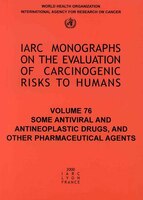
Some Antiviral and Antineoplastic Drugs and Other Pharmaceutical Agents
2021-01-06 21:01:36
Evaluates the carcinogenic risks to humans posed by the use of four antiretroviral agents four DNA topoisomerase II inhibitors used in the treatment of cancer and an additional three pharmaceutical agents (hydroxyures phenolphthalein and vitamin ...
Read more
Evaluates the carcinogenic risks to humans posed by the use of four antiretroviral agents four DNA topoisomerase II inhibitors used in the treatment of cancer and an additional three pharmaceutical agents (hydroxyures phenolphthalein and vitamin K substances). The volume marks the first IARC evaluation of nucleoside analogs that act as antiviral agents.
The evaluation responds in part to recent findings that zidovudine (AZT) an effective antiretroviral agent now being given to pregnant HIV-infected women to prevent maternal-to-fetal transmission of the virus is a transplacental carcinogen in mice. The opening monograph evaluates the carcinogenicity to humans of the antiretroviral nucleoside analogs zidovudine (AZT) zalcitabine (ddC) and didanosine (ddI) and the antiherpesvirus drug aciclovir. Of these aciclovir and didanosine could not be classified on the basis of available data. For zidovudine transplacental administration to mice resulted in an increased incidence and multiplicity of lung and liver tumours and in an increased incidence of female reproductive tract tumours in one study but not in another involving treatment at a lower dose.
Despite observation of toxic effects in some studies of humans human carcinogenicity data were judged to provide inadequate evidence of carcinogenicity in humans. Zidovudine was classified as possibly carcinogenic to humans. Similar weaknesses in human carcinogenicity data for zalcitabine which consistently induces thymic lymphomas in mice resulted in its classification as possibly carcinogenic to humans.
The second monograph evaluates four DNA topoisomerase II inhibitors: etoposide teniposide mitoxantrone and amsacrine. Of these etoposide - one of the most widely used and effective cytotoxic drugs in combination therapy - was classified as probably carcinogenic to humans and etoposide in combination with cisplatin and bleomycin was judged to be carcinogenic to humans. Teniposide was classified as probably carcinogenic to humans and mitoxantrone and amsacrine were classified as possibly carcinogenic to humans.
Of the three pharmaceutical agents evaluated in the final monograph hydroxyurea which is widely used in cancer treatment and increasingly in combination with didanosine in HIV infection could not be classified. Phenolphthalein a widely used laxative now being withdrawn from the market in many countries because of toxicological concerns was classified as possibly carcinogenic. Vitamin K substances could not be classified on the basis of available evidence. Less
The evaluation responds in part to recent findings that zidovudine (AZT) an effective antiretroviral agent now being given to pregnant HIV-infected women to prevent maternal-to-fetal transmission of the virus is a transplacental carcinogen in mice. The opening monograph evaluates the carcinogenicity to humans of the antiretroviral nucleoside analogs zidovudine (AZT) zalcitabine (ddC) and didanosine (ddI) and the antiherpesvirus drug aciclovir. Of these aciclovir and didanosine could not be classified on the basis of available data. For zidovudine transplacental administration to mice resulted in an increased incidence and multiplicity of lung and liver tumours and in an increased incidence of female reproductive tract tumours in one study but not in another involving treatment at a lower dose.
Despite observation of toxic effects in some studies of humans human carcinogenicity data were judged to provide inadequate evidence of carcinogenicity in humans. Zidovudine was classified as possibly carcinogenic to humans. Similar weaknesses in human carcinogenicity data for zalcitabine which consistently induces thymic lymphomas in mice resulted in its classification as possibly carcinogenic to humans.
The second monograph evaluates four DNA topoisomerase II inhibitors: etoposide teniposide mitoxantrone and amsacrine. Of these etoposide - one of the most widely used and effective cytotoxic drugs in combination therapy - was classified as probably carcinogenic to humans and etoposide in combination with cisplatin and bleomycin was judged to be carcinogenic to humans. Teniposide was classified as probably carcinogenic to humans and mitoxantrone and amsacrine were classified as possibly carcinogenic to humans.
Of the three pharmaceutical agents evaluated in the final monograph hydroxyurea which is widely used in cancer treatment and increasingly in combination with didanosine in HIV infection could not be classified. Phenolphthalein a widely used laxative now being withdrawn from the market in many countries because of toxicological concerns was classified as possibly carcinogenic. Vitamin K substances could not be classified on the basis of available evidence. Less

Compare Prices
| Store | Availability | Book Format | Condition | Price |
|---|---|---|---|---|
| Indigo Books & Music | In Stock | Buy CAD 91.50 | ||
| BetterWorld.com - New, Used, Rare Books & Textbooks | In Stock | Buy USD 5.74 |
Available Discount
No Discount available
Related Books
View All
Good Night, Little Blue Truck

We Are Not Friends (You Are Not Small)

Row, Row, Row Your Boat (Indestructibles Series)

The Book Club

Life Will Be the Death of Me: ...And You Too!

The Silent Woman (Cat Carlisle, Book 1)
Clean & Lean: 30 Days, 30 Foods, a New You!

Hurricane Season

Commander in Cheat: How Golf Explains Trump

Trillion Dollar Coach: The Leadership Playbook of Silicon Valley's Bill Campbell
The Pout-Pout Fish

Made for Me

Feed Your Best Friend Better: Easy, Nutritious Meals and Treats for Dogs

The Secret Wife: A captivating story of romance, passion and mystery

House of Shadows: An Enthralling Historical Mystery

There Was an Old Lady Who Swallowed a Chick!

Can't Make This Stuff Up!: Finding the Upside to Life's Downs

Going to School

American Moonshot: John F. Kennedy and the Great Space Race

Twinkle, Twinkle, Little Star (Indestructibles Series)
Falter: Has the Human Game Begun to Play Itself Out?

Diary of an Awesome Friendly Kid: Rowley Jefferson's Journal

You Be You: Detox Your Life, Crush Your Limitations, and Own Your Awesome

The Wonderful Things You Will Be

Secrets Between Us: An absolutely gripping psychological thriller

Settings
Reflow text when sidebars are open.
