
- Browse Category
Subjects
 We Begin at the EndLearn More
 - Choice Picks
- Top 100 Free Books
- Blog
- Recently Added
- Submit your eBook
- Browse Category
We Begin at the EndLearn More
- Choice Picks
- Top 100 Free Books
- Blog
- Recently Added
- Submit your eBook
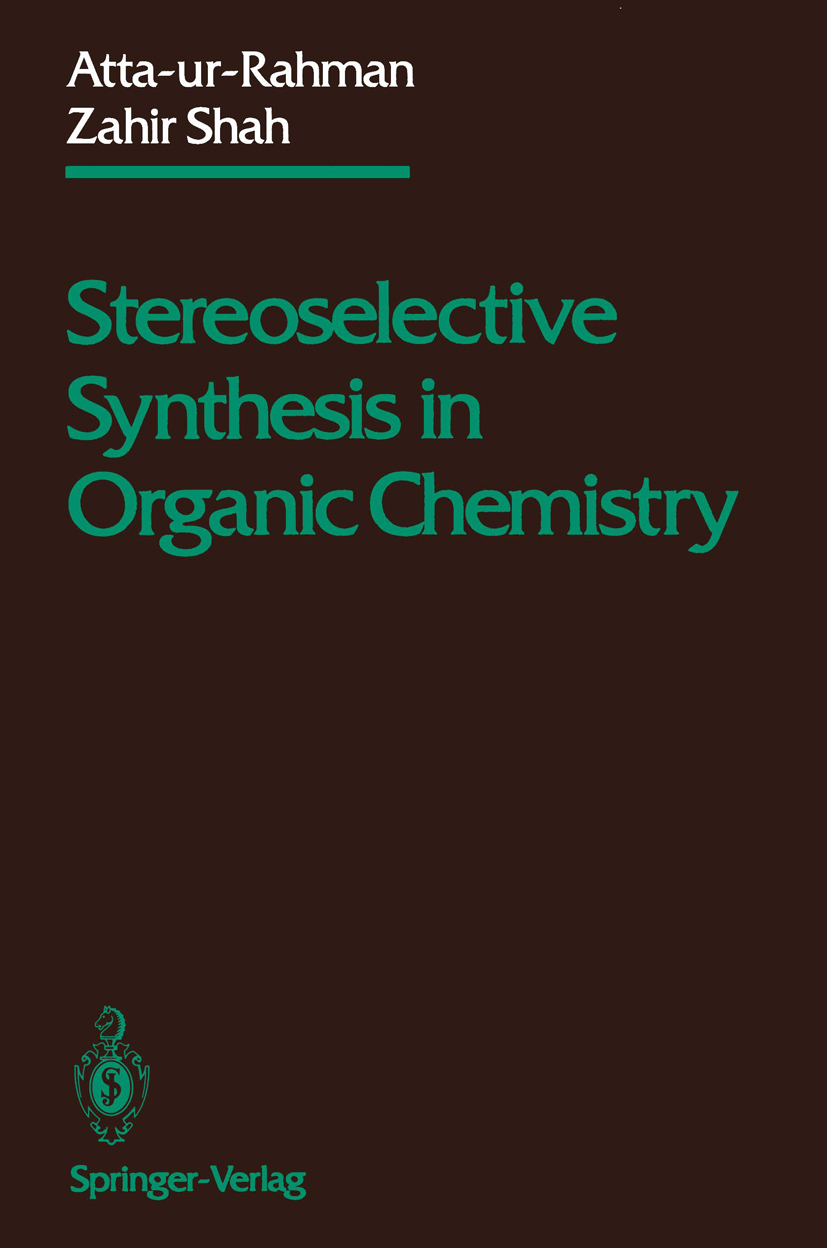
Stereoselective Synthesis in Organic Chemistry
2020-12-29 10:10:54
1 Stereochemical Principles.- 1.1 Introduction.- 1.2 Chirality.- 1.3 Diastereotopic Groups and Faces.- 1.4 Enantiotopic Groups and Faces.- 1.5 Homotopic Groups and Faces.- 1.6 Homochiral Relationships.- 1.7 Selectivity in Organic Synthesis.- 1.7.1 Ch...
Read more
1 Stereochemical Principles.- 1.1 Introduction.- 1.2 Chirality.- 1.3 Diastereotopic Groups and Faces.- 1.4 Enantiotopic Groups and Faces.- 1.5 Homotopic Groups and Faces.- 1.6 Homochiral Relationships.- 1.7 Selectivity in Organic Synthesis.- 1.7.1 Chemoselectivity.- 1.7.2 Regioselectivity.- 1.7.3 Diastereoselectivity.- 1.7.4 Enantioselectivity.- 1.7.4.1 Reactions in Presence of Chiral Additives.- 1.7.4.2 Reactions Involving Covalent Linkages of Chiral Auxiliary Groups with Substrates.- 1.7.4.3 Reactions with Chiral Reagents.- 1.7.4.4 Reactions with Enzymes.- 1.8 References.- 2 Stereoselective Catalytic Reductions.- 2.1 Homogeneous Catalytic Hydrogenations.- 2.1.1 Hydrogenation of Olefins.- 2.1.1.1 Hydrogenation with Rh-complexes.- 2.1.1.1.1 Tetrasubstituted Olefins.- 2.1.1.1.2 Substituted Itaconate Esters.- 2.1.1.2 Hydrogenation with Ru-complexes.- 2.1.1.2.1 Allylic and Homoallylic Alcohols.- 2.1.1.2.2 Unsaturated Carboxylic Acids.- 2.1.1.2.3 Dicarboxylic Acids.- 2.1.1.2.4 Dehydroamino Acids.- 2.1.1.2.5 Prochiral Ketones.- 2.1.1.3 Hydrogenation with Ti-complexes.- 2.1.1.4 Hydrogenation with Co-complexes.- 2.1.1.5 Hydrogenation with Heterobimetallic Complexes.- 2.1.2 Catalytic Hydrosilylation.- 2.1.2.1 Catalytic Hydrosilylation of Olefins.- 2.1.2.2 Catalytic Hydrosilylation of Imines.- 2.1.3 Catalytic Hydrogenation of Ketones.- 2.1.3.1 Direct Hydrogenation of Simple Ketones.- 2.1.3.2 Direct Hydrogenation of Functionalized Ketones.- 2.1.3.2.1 With Rhodium-Diphosphine Catalysts.- 2.1.3.2.2 With Ruthenium Complexes.- 2.1.3.2.3 With Copper Complexes.- 2.1.3.3 Hydrogenation of Ketones via Derivatization.- 2.1.3.3.1 Hydrogenation of Simple Ketones via Hydrosilylation.- 2.1.3.3.2 Hydrogenation of Functionalized Ketones via Hydrosilylation.- 2.1.3.3.3 Hydrogenation of Ketones via Enol Phosphinates.- 2.2 Heterogeneous Catalytic Hydrogenations.- 2.2.1 Enantioselective Heterogeneous Catalytic Hydrogenations.- 2.2.2 Diastereoselective Heterogeneous Catalytic Hydrogenations.- 2.2.2.1 Asymmetric Hydrogenation of Carbon-Carbon Double Bonds.- 2.2.2.1.1 Hydrogenation of N-Acyl-?,ß-Dehydroamino Acids.- 2.2.2.1.2 Asymmetric Hydrogenation of Cyclic Dehydropeptides.- 2.2.2.2 Asymmetric Hydrogenation of other Carbonyl Compounds.- 2.2.2.2.1 Asymmetric Hydrogenation of Benzoylformic Acid Esters.- 2.2.2.2.2 Asymmetric Hydrogenation of ?-Keto Amides.- 2.2.2.3 Asymmetric Hydrogenation of Carbon-Nitrogen Double Bonds.- 2.2.2.3.1 Hydrogenation of Imines, Oximes and Hydrazones.- 2.3 References.- 3 Stereoselective Non-Catalytic Reductions.- 3.1 Enantioselective Non-Catalytic Reductions.- 3.1.1 Chiral Metal-hydride Complexes.- 3.1.1.1 Lithium Aluminium Hydride Modified with Chiral Groups.- 3.1.1.1.1 LAH Modified with Alcohols.- 3.1.1.1.2 LAH Modified with Amino Alcohols.- 3.1.1.2 Chiral Boranes and Borohydrides.- 3.1.1.2.1 Chiral Alkylboranes.- 3.1.1.2.2 Chiral Borohydride Reagents.- 3.1.1.2.2.1 NaBH4-derived Reagents.- 3.1.1.2.2.1.1 Phase Transfer Catalyzed Reductions.- 3.1.1.2.2.1.2 LiBH4 Reductions.- 3.1.1.2.2.2 Super Hydrides.- 3.1.2 Chiral Metal Alkyls and Alkoxides.- 3.1.3 Chiral Dihydropyridine Reagents.- 3.2 Diastereoselective Non-Catalytic Reductions.- 3.2.1 Cyclic Substrates.- 3.2.2 Acyclic Substrates.- 3.2.2.1 1, 2- Induction.- 3.2.2.2 1,3-, 1,4- and 1,6- Inductions.- 3.2.2.2.1 Cyclic Ketones.- 3.3 References.- 4 Stereoselective Carbon-Carbon Bond Forming Reactions.- 4.1 Nucleophilic Additions to Aldehydes and Ketones.- 4.1.1 Enantioselective Addition Reactions.- 4.1.2 Diastereoselective Addition Reactions.- 4.1.2.1 Diastereoselective Additions to Carbonyl Compounds.- 4.1.2.2 Diastereoselective Additions to Cyclic Ketones.- 4.1.3 Addition of Chiral Reagents.- 4.1.4 Stereoselectivity of Nucleophilic Addition Reactions.- 4.2 Asymmetric Catalytic Hydrocarbonylations.- 4.2.1 Asymmetric Hydroformylations.- 4.2.1.1 Asymmetric Hydroformylation with Homogeneous Catalysts.- 4.2.1.2 Asymmetric Hydroformylations with Heterogeneous Catalysts.- 4.2.2 Asymmetric Hydroesterification.- 4.3 Asymmetric Aldol Reactions.- 4.3.1 Stereochemistry of the Aldol Reaction.- 4.3.1.1 Transition State Models in the Aldol Reaction.- 4.3.2 Addition of Enolates to Achiral Aldehydes.- 4.3.2.1 Generation and Aldol Reactions of Enolates.- 4.3.2.1.1 Li Enolates in Aldol Reactions.- 4.3.2.1.1.1 Ketone Enolates.- 4.3.2.1.1.2 Ester and Lactone Enolates.- 4.3.2.1.1.3 Amide and Lactam Enolates.- 4.3.2.1.1.4 Thioester and Thioamide Enolates.- 4.3.2.1.1.5 Carboxylic Acid Dianions.- 4.3.2.1.2 Boron Enolates in Aldol Reactions.- 4.3.2.1.3. Magnesium Enolates in Aldol Reactions.- 4.3.2.1.4 Titanium Enolates in Aldol Reactions.- 4.3.2.1.5 Zinc Enolates in Aldol Reactions.- 4.3.2.1.6 Tin Enolates in Aldol Reactions.- 4.3.2.1.7 Silicon Enolates in Aldol Reactions.- 4.3.2.1.8 Zirconium Enolates in Aldol Reactions.- 4.3.3 Addition of Chiral Enolates to Achiral Aldehydes and Unsymmetric Ketones (the Cross Aldol Reaction).- 4.3.3.1 Metal Atoms as Chiral Centres in Aldol Reactions
Less

Compare Prices
| Store | Availability | Book Format | Condition | Price |
|---|---|---|---|---|
| BetterWorld.com - New, Used, Rare Books & Textbooks | In Stock | Buy USD 4.09 | ||
| eBooks.com | In Stock | PDF (drm free, digitally watermarked) | PDF (drm free, digitally watermarked) | Buy AUD 169.00 |
eBooks.comIn Stock
Format
PDF (drm free, digitally watermarked)
Condition
PDF (drm free, digitally watermarked)
Available Discount
No Discount available
Related Books
View All
You Be You: Detox Your Life, Crush Your Limitations, and Own Your Awesome

The Silent Woman (Cat Carlisle, Book 1)

Good Night, Little Blue Truck

The Pout-Pout Fish

Hurricane Season
Clean & Lean: 30 Days, 30 Foods, a New You!

American Moonshot: John F. Kennedy and the Great Space Race
Diary of an Awesome Friendly Kid: Rowley Jefferson's Journal

Commander in Cheat: How Golf Explains Trump

Falter: Has the Human Game Begun to Play Itself Out?

Secrets Between Us: An absolutely gripping psychological thriller

We Are Not Friends (You Are Not Small)

Can't Make This Stuff Up!: Finding the Upside to Life's Downs

The Wonderful Things You Will Be

House of Shadows: An Enthralling Historical Mystery
Trillion Dollar Coach: The Leadership Playbook of Silicon Valley's Bill Campbell

Row, Row, Row Your Boat (Indestructibles Series)

Life Will Be the Death of Me: ...And You Too!

Twinkle, Twinkle, Little Star (Indestructibles Series)

There Was an Old Lady Who Swallowed a Chick!

The Secret Wife: A captivating story of romance, passion and mystery

Going to School

Made for Me

The Book Club

Feed Your Best Friend Better: Easy, Nutritious Meals and Treats for Dogs

Settings
Reflow text when sidebars are open.
