
- Browse Category
Subjects
 We Begin at the EndLearn More
 - Choice Picks
- Top 100 Free Books
- Blog
- Recently Added
- Submit your eBook
- Browse Category
We Begin at the EndLearn More
- Choice Picks
- Top 100 Free Books
- Blog
- Recently Added
- Submit your eBook
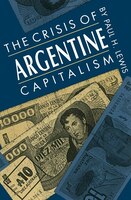
The Crisis of Argentine Capitalism
2021-01-03 05:45:21
At the end of World War II, Argentina was the most industrialized nation in Latin America, with a highly urbanized, literate, and pluralistic society. But over the past four decades, the country has suffered political and economic crises of increasi...
Read more
At the end of World War II, Argentina was the most industrialized nation in Latin America, with a highly urbanized, literate, and pluralistic society. But over the past four decades, the country has suffered political and economic crises of increasing intensity that have stalled industrial growth, sharpened class conflict, and led to long periods of military rule. In this book, Paul Lewis attempts to explain how that happened.
Lewis begins by describing the early development of Argentine industry, from just before the turn of the century to the eve of Juan Peron''s rise to power after World War II. He discusses the emergence of the new industrialists and urban workers and delineates the relationships between those classes and the traditional agrarian elites who controlled the state.
Under Peron, the country shifted from an essentially liberal strategy of development to a more corporatist approach. Whereas most writers view Peron as a pragmatist, if not opportunist, Lewis treats him as an ideologue whose views remained consistent throughout his career, and he holds Peron, along with his military colleagues, chiefly responsible for ending the evolution of Argentina''s economy toward dynamic capitalism.
Lewis describes the political stalemate between Peronists and anti-Peronists from 1955 to 1987 and shows how the failure of post-Peron governments to incorporate the trade union movement into the political and economic mainstream resulted in political polarization, economic stagnation, and a growing level of violence. He then recounts Peron''s triumphal return to power and the subsequent inability of his government to restore order and economic vigor through a return to corporatist measures. Finally, Lewis examines the equally disappointing failures of the succeeding military regime under General Videla and the restoration of democracy under President Raul Alfonsin to revive the free market.
By focusing on the organization, development, and political activities of pressure groups rather than on parties or governmental institutions, Lewis gets to the root causes of Argentina''s instability and decline--what he calls "the politics of political stagnation." At the same time, he provides important information about Argentina''s entrepreneurial classes and their relation to labor, government, the military, and foreign capital. The book is unique in the wealth of its detail and the depth of its analysis.
Less
Lewis begins by describing the early development of Argentine industry, from just before the turn of the century to the eve of Juan Peron''s rise to power after World War II. He discusses the emergence of the new industrialists and urban workers and delineates the relationships between those classes and the traditional agrarian elites who controlled the state.
Under Peron, the country shifted from an essentially liberal strategy of development to a more corporatist approach. Whereas most writers view Peron as a pragmatist, if not opportunist, Lewis treats him as an ideologue whose views remained consistent throughout his career, and he holds Peron, along with his military colleagues, chiefly responsible for ending the evolution of Argentina''s economy toward dynamic capitalism.
Lewis describes the political stalemate between Peronists and anti-Peronists from 1955 to 1987 and shows how the failure of post-Peron governments to incorporate the trade union movement into the political and economic mainstream resulted in political polarization, economic stagnation, and a growing level of violence. He then recounts Peron''s triumphal return to power and the subsequent inability of his government to restore order and economic vigor through a return to corporatist measures. Finally, Lewis examines the equally disappointing failures of the succeeding military regime under General Videla and the restoration of democracy under President Raul Alfonsin to revive the free market.
By focusing on the organization, development, and political activities of pressure groups rather than on parties or governmental institutions, Lewis gets to the root causes of Argentina''s instability and decline--what he calls "the politics of political stagnation." At the same time, he provides important information about Argentina''s entrepreneurial classes and their relation to labor, government, the military, and foreign capital. The book is unique in the wealth of its detail and the depth of its analysis.
Less

Compare Prices
| Store | Availability | Book Format | Condition | Price |
|---|---|---|---|---|
| Indigo Books & Music | In Stock | Paperback | Paperback | Buy CAD 87.95 |
| BetterWorld.com - New, Used, Rare Books & Textbooks | In Stock | Buy USD 30.23 |
Available Discount
No Discount available
Related Books
View All
House of Shadows: An Enthralling Historical Mystery

American Moonshot: John F. Kennedy and the Great Space Race

Can't Make This Stuff Up!: Finding the Upside to Life's Downs

The Wonderful Things You Will Be

Falter: Has the Human Game Begun to Play Itself Out?

Row, Row, Row Your Boat (Indestructibles Series)

Clean & Lean: 30 Days, 30 Foods, a New You!

We Are Not Friends (You Are Not Small)

Going to School
Trillion Dollar Coach: The Leadership Playbook of Silicon Valley's Bill Campbell

Good Night, Little Blue Truck

The Pout-Pout Fish

Commander in Cheat: How Golf Explains Trump

Life Will Be the Death of Me: ...And You Too!

Made for Me

Diary of an Awesome Friendly Kid: Rowley Jefferson's Journal

The Silent Woman (Cat Carlisle, Book 1)

Secrets Between Us: An absolutely gripping psychological thriller

There Was an Old Lady Who Swallowed a Chick!

Twinkle, Twinkle, Little Star (Indestructibles Series)

The Secret Wife: A captivating story of romance, passion and mystery

Hurricane Season

Feed Your Best Friend Better: Easy, Nutritious Meals and Treats for Dogs

The Book Club

You Be You: Detox Your Life, Crush Your Limitations, and Own Your Awesome

Settings
Reflow text when sidebars are open.
