
- Browse Category
Subjects
 We Begin at the EndLearn More
 - Choice Picks
- Top 100 Free Books
- Blog
- Recently Added
- Submit your eBook
- Browse Category
We Begin at the EndLearn More
- Choice Picks
- Top 100 Free Books
- Blog
- Recently Added
- Submit your eBook
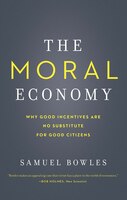
The Moral Economy: Why Good Incentives Are No Substitute For Good Citizens
2020-12-31 12:28:09
Why do policies and business practices that ignore the moral and generous side of human nature often fail? Should the idea of economic man—the amoral and self-interested Homo economicus—determine how we expect people to respond to monetar...
Read more
Why do policies and business practices that ignore the moral and generous side of human nature often fail?
Should the idea of economic man—the amoral and self-interested Homo economicus—determine how we expect people to respond to monetary rewards, punishments, and other incentives? Samuel Bowles answers with a resounding “no.” Policies that follow from this paradigm, he shows, may “crowd out” ethical and generous motives and thus backfire.
But incentives per se are not really the culprit. Bowles shows that crowding out occurs when the message conveyed by fines and rewards is that self-interest is expected, that the employer thinks the workforce is lazy, or that the citizen cannot otherwise be trusted to contribute to the public good. Using historical and recent case studies as well as behavioral experiments, Bowles shows how well-designed incentives can crowd in the civic motives on which good governance depends.
LessShould the idea of economic man—the amoral and self-interested Homo economicus—determine how we expect people to respond to monetary rewards, punishments, and other incentives? Samuel Bowles answers with a resounding “no.” Policies that follow from this paradigm, he shows, may “crowd out” ethical and generous motives and thus backfire.
But incentives per se are not really the culprit. Bowles shows that crowding out occurs when the message conveyed by fines and rewards is that self-interest is expected, that the employer thinks the workforce is lazy, or that the citizen cannot otherwise be trusted to contribute to the public good. Using historical and recent case studies as well as behavioral experiments, Bowles shows how well-designed incentives can crowd in the civic motives on which good governance depends.

Compare Prices
| Store | Availability | Book Format | Condition | Price |
|---|---|---|---|---|
| Indigo Books & Music | In Stock | Paperback | Paperback | Buy CAD 22.68 |
Available Discount
No Discount available
Related Books
View All
Hurricane Season

The Secret Wife: A captivating story of romance, passion and mystery
Commander in Cheat: How Golf Explains Trump

American Moonshot: John F. Kennedy and the Great Space Race

Feed Your Best Friend Better: Easy, Nutritious Meals and Treats for Dogs

Good Night, Little Blue Truck

Going to School

Row, Row, Row Your Boat (Indestructibles Series)

Made for Me

The Book Club

There Was an Old Lady Who Swallowed a Chick!

The Silent Woman (Cat Carlisle, Book 1)
Clean & Lean: 30 Days, 30 Foods, a New You!
Can't Make This Stuff Up!: Finding the Upside to Life's Downs

You Be You: Detox Your Life, Crush Your Limitations, and Own Your Awesome

We Are Not Friends (You Are Not Small)

Life Will Be the Death of Me: ...And You Too!
Trillion Dollar Coach: The Leadership Playbook of Silicon Valley's Bill Campbell

House of Shadows: An Enthralling Historical Mystery
Diary of an Awesome Friendly Kid: Rowley Jefferson's Journal
Falter: Has the Human Game Begun to Play Itself Out?

Twinkle, Twinkle, Little Star (Indestructibles Series)

The Wonderful Things You Will Be

Secrets Between Us: An absolutely gripping psychological thriller
The Pout-Pout Fish

Settings
Reflow text when sidebars are open.
