
- Browse Category
Subjects
 We Begin at the EndLearn More
 - Choice Picks
- Top 100 Free Books
- Blog
- Recently Added
- Submit your eBook
- Browse Category
We Begin at the EndLearn More
- Choice Picks
- Top 100 Free Books
- Blog
- Recently Added
- Submit your eBook
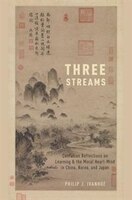
Three Streams: Confucian Reflections on Learning and the Moral Heart-Mind in China, Korea, and Japan
2020-11-24 12:59:10
Recent interest in Confucianism has a tendency to suffer from essentialism and idealism, manifested in a variety of ways. One example is to think of Confucianism in terms of the views attributed to one representative of the tradition, such as Kongzi ...
Read more
Recent interest in Confucianism has a tendency to suffer from essentialism and idealism, manifested in a variety of ways. One example is to think of Confucianism in terms of the views attributed to one representative of the tradition, such as Kongzi (Confucius) (551-479 BCE) or Mengzi(Mencius) (372 - 289 BCE) or one school or strand of the tradition, most often the strand or tradition associated with Mengzi or, in the later tradition, that formed around the commentaries and interpretation of Zhu Xi (1130-1200). Another such tendency is to think of Confucianism in terms of itsmanifestations in only one country; this is almost always China for the obvious reasons that China is one of the most powerful and influential states in the world today. A third tendency is to present Confucianism in terms of only one period or moment in the tradition; for example, among ethical andpolitical philosophers, pre-Qin Confucianism-usually taken to be the writings attributed to Kongzi, Mengzi, and, if we are lucky, Xunzi (479-221 BCE)-often is taken as "Confucianism."These and other forms of essentialism and idealism have led to a widespread and deeply entrenched impression that Confucianism is thoroughly homogenous and monolithic (these often are "facts" mustered to support the purportedly oppressive, authoritarian, and constricted nature of the tradition);such impressions can be found throughout East Asia and dominate in the West. This is quite deplorable for it gives us no genuine sense of the creatively rich, philosophically powerful, highly variegated, and still very much open-ended nature of the Confucian tradition. This volume addresses thismisconstrual and misrepresentation of Confucianism by presenting a philosophically critical account of different Confucian thinkers and schools, across place (China, Korea, and Japan) and time (the 10th to 19th centuries).
Less

Compare Prices
| Store | Availability | Book Format | Condition | Price |
|---|---|---|---|---|
| Indigo Books & Music | In Stock | Buy CAD 81.50 |
Available Discount
No Discount available
Related Books
View All
Trillion Dollar Coach: The Leadership Playbook of Silicon Valley's Bill Campbell

Going to School

You Be You: Detox Your Life, Crush Your Limitations, and Own Your Awesome

Life Will Be the Death of Me: ...And You Too!
Hurricane Season

The Wonderful Things You Will Be

The Secret Wife: A captivating story of romance, passion and mystery

Secrets Between Us: An absolutely gripping psychological thriller
Clean & Lean: 30 Days, 30 Foods, a New You!

Feed Your Best Friend Better: Easy, Nutritious Meals and Treats for Dogs

Twinkle, Twinkle, Little Star (Indestructibles Series)

House of Shadows: An Enthralling Historical Mystery

Commander in Cheat: How Golf Explains Trump
Diary of an Awesome Friendly Kid: Rowley Jefferson's Journal

There Was an Old Lady Who Swallowed a Chick!
Can't Make This Stuff Up!: Finding the Upside to Life's Downs

Made for Me

The Book Club
The Pout-Pout Fish

The Silent Woman (Cat Carlisle, Book 1)

Good Night, Little Blue Truck

American Moonshot: John F. Kennedy and the Great Space Race

We Are Not Friends (You Are Not Small)
Falter: Has the Human Game Begun to Play Itself Out?

Row, Row, Row Your Boat (Indestructibles Series)

Settings
Reflow text when sidebars are open.
