
- Browse Category
Subjects
 We Begin at the EndLearn More
 - Choice Picks
- Top 100 Free Books
- Blog
- Recently Added
- Submit your eBook
- Browse Category
We Begin at the EndLearn More
- Choice Picks
- Top 100 Free Books
- Blog
- Recently Added
- Submit your eBook
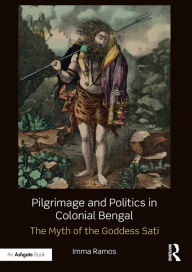
Pilgrimage and Politics in Colonial Bengal: The Myth of the Goddess Sati
2020-03-20 16:00:07
From the late nineteenth century onwards the concept of Mother India assumed political significance in colonial Bengal. Reacting against British rule, Bengali writers and artists gendered the nation in literature and visual culture in order to inspir...
Read more
From the late nineteenth century onwards the concept of Mother India assumed political significance in colonial Bengal. Reacting against British rule, Bengali writers and artists gendered the nation in literature and visual culture in order to inspire patriotism amongst the indigenous population. This book will examine the process by which the Hindu goddess Sati rose to sudden prominence as a personification of the subcontinent and an icon of heroic self-sacrifice. According to a myth of cosmic dismemberment, Sati’s body parts were scattered across South Asia and enshrined as Shakti Pithas, or Seats of Power. These sacred sites were re-imagined as the fragmented body of the motherland in crisis that could provide the basis for an emergent territorial consciousness. The most potent sites were located in eastern India, Kalighat and Tarapith in Bengal, and Kamakhya in Assam. By examining Bengali and colonial responses to these temples and the ritual traditions associated with them, including Tantra and image worship, this book will provide the first comprehensive study of this ancient network of pilgrimage sites in an art historical and political context.
Less

Compare Prices
| Store | Availability | Book Format | Condition | Price |
|---|---|---|---|---|
| Barnes & Noble | In Stock | NOOK Book | NOOK Book | Buy USD 50.99 |
Available Discount
No Discount available
Related Books
View All
Lectures on Landscape Delivered at Oxford in Lent Term 1871

The Art of the Moving Picture

The Psychology of Beauty
.jpg)
Raphael

The Venetian Painters of the Renaissance Third Edition

Cartoons on the War

History of Greek Art

The History of Painting in Italy, Vol. 1 of 6: From the Period of the Revival of the Fine Arts to the End of the Eighteenth Century

Lectures on Architecture and Painting: Delivered at Edinburgh in November 1853

Lectures on Art, Delivered Before the University of Oxford in Hilary Term, 1870

Florentine Painters of the Renaissance With an Index to their Works
.EBOOK COVER.jpg)
Joy for Ever (And Its Price In market)

Anecdotes of Painters, Engravers, Sculptors and Architects and Curiosities of Art (Vol. 3 of 3)

The Renaissance: Studies in Art and Poetry (Dover Fine Art, History of Art)

An Art-Lovers Guide to the Exposition

The Works of William Hogarth: In a Series of Engravings : With Descriptions, and a Comment on Their Moral Tendency / by the Rev. John Trusler

Advice to Young Musicians, Musikalische Haus- Und Lebens-Regeln

Nietzsche and Art

Sir Joshua Reynolds: A Collection of Fifteen Pictures and a Portrait of the Painter
.jpg)
Navajo Silversmiths Second Annual Report of the Bureau of Ethnology to the Secretary of the Smithsonian Institution, 1880-1881, Government Printing Office, Washington, 1883, Pages 167-178

London Cries & Public Edifices

Franz Liszt

Handbuch Der Deutschen Kunstdenkmaler, Bd. 1. Mitteldeutschland, 1914

Great Artists, Vol 1. Raphael, Rubens, Murillo, and Durer(Artist)

Toledo: The Story of an Old Spanish Capital

Settings
Reflow text when sidebars are open.
