
- Browse Category
Subjects
 We Begin at the EndLearn More
 - Choice Picks
- Top 100 Free Books
- Blog
- Recently Added
- Submit your eBook
- Browse Category
We Begin at the EndLearn More
- Choice Picks
- Top 100 Free Books
- Blog
- Recently Added
- Submit your eBook
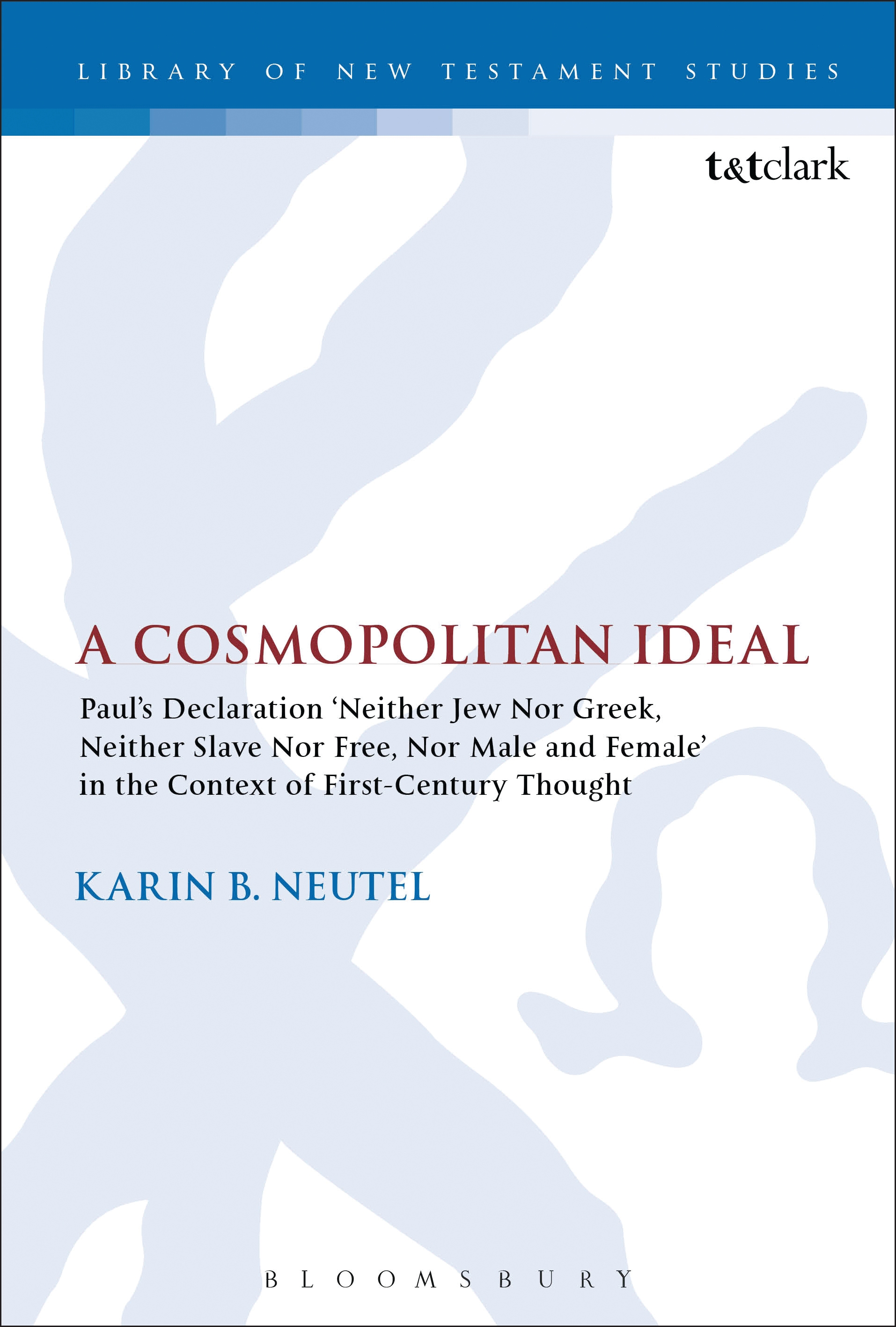
A Cosmopolitan Ideal
2020-05-07 13:08:40
What did Paul mean when he declared that there is 'neither Jew nor Greek, neither slave nor free, nor male and female' (Galatians 3:28)? While many modern readers understand these words as a statement about human equality, this study shows that it in...
Read more
What did Paul mean when he declared that there is 'neither Jew nor Greek, neither slave nor free, nor male and female' (Galatians 3:28)? While many modern readers understand these words as a statement about human equality, this study shows that it in fact reflects ancient ideas about an ideal or utopian community. With this declaration, Paul contributed to the cultural conversation of his time about such a community. The three pairs that Paul brings together in this formula all played a role in first-century conceptions of what an ideal world would look like. Such conceptions were influenced by cosmopolitanism; the philosophical idea prevalent at the time, that all people were fundamentally connected and could all live in a unified society. Understanding Paul's thought in the context of these contemporary ideals helps to clarify his attitude towards each of the three pairs in his letters. Like other ancient utopian thinkers, Paul imagined the ideal community to be based on mutual dependence and egalitarian relationships.
Less

Compare Prices
| Store | Availability | Book Format | Condition | Price |
|---|---|---|---|---|
| Indigo Books & Music | In Stock | Buy CAD 63.95 | ||
| eBooks.com | In Stock | Buy CAD 58.48 |
Available Discount
No Discount available
Related Books
View All
Hinduism and Buddhism: An Historical Sketch (3 Vols.)

A Theory of Creation

President Heber C. Kimball's Journal: Designed for the Instruction and Encouragement of Young Latter-Day Saints...

The Spirit of Christmas

Pagan and Christian Creeds Their Origin and Meaning

The Evolution of the Idea of God: An Inquiry Into the Origin of Religions

Twelve Studies on the Making of a Nation The Beginnings of Israel's History

A New Witness for God (Volume 1 of 3)

The Quakers, Past and Present

Jesus the Christ: A Study of the Messiah and His Mission According to Holy Scriptures Both Ancient and Modern
.jpeg)
The Origin of Our Knowledge of Right and Wrong (Routledge Revivals)

Story of Mormonism & the Philosophy of Mormonism

History of the Prophet Joseph By His Mother
.jpg)
Pantheism Its Story and Significance

The Mormon Doctrine of Deity, the Roberts-Van Der Donckt Discussion, to Which Is Added a Discourse, Jesus Christ: The Revelation of God

The Government of God

Ten Great Religions: An Essay in Comparative Theology

The Religious Life of the Zuñi Child

The Missouri Persecutions

Bygone Beliefs Being a Series of Excursions in the Byways of Thought

Twenty-Four Discourses on Some of the Important and Interesting Truths, Duties and Institutions of the Gospel, and the General Excellency of the ... Particularly for the Benefit of Piou

A Comparative View of Religions

The Bible Unveiled
Crushing: God Turns Pressure into Power

Rational Theology; As Taught by the Church of Jesus Christ of Latter-Day Saints

Settings
Reflow text when sidebars are open.
